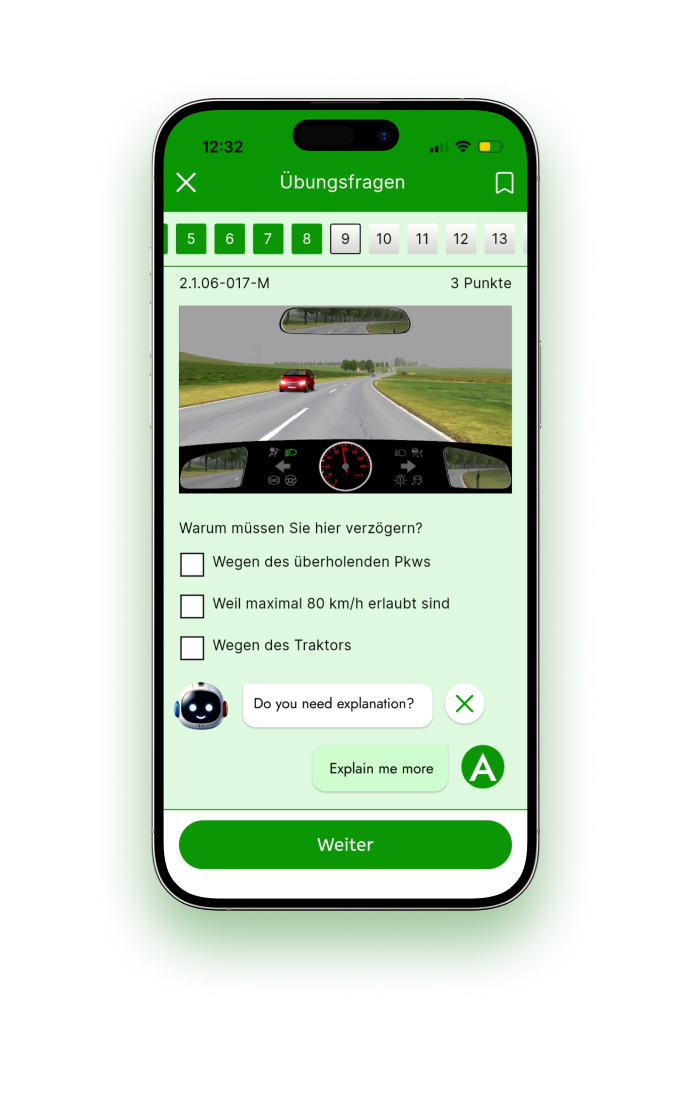
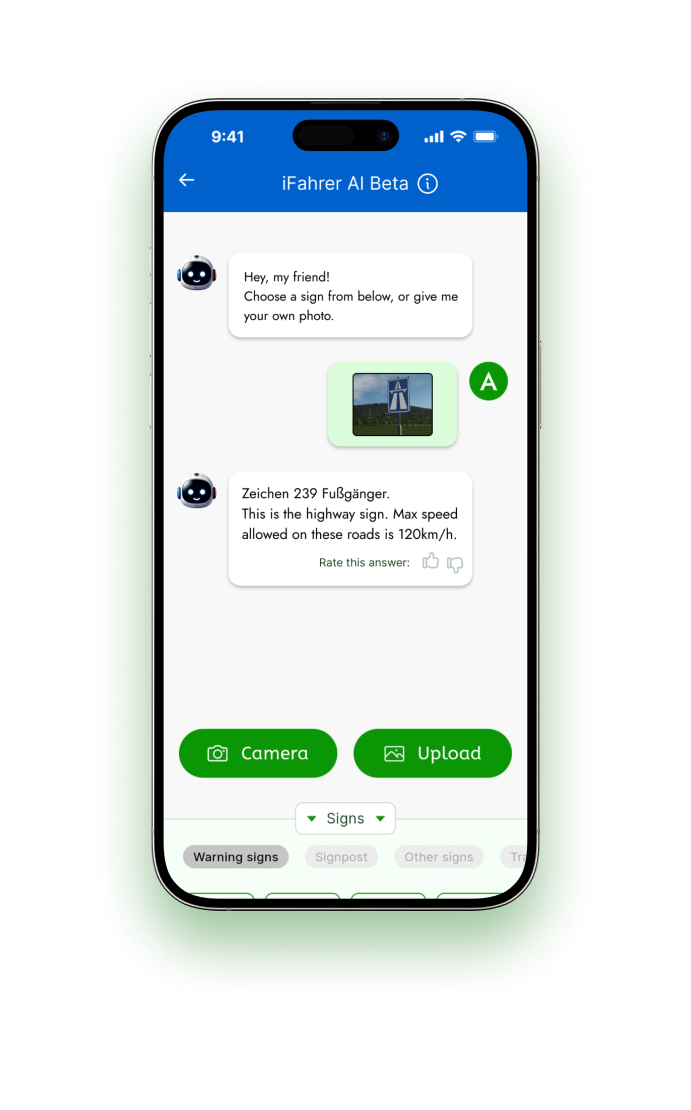
Get ready for your license test with AI assistance!
You are driving through city traffic in rush hour. What are the effects of stop-and-go driving?
- consumes more fuel
- creates more exhaust gases
- creates more nuisances for others
Here is Our AI Assistant's Explanation
In stop-and-go traffic you keep accelerating, braking, and often idling. That driving style is inefficient and has three typical effects, which is why answers 1, 2 and 3 are all correct.
Answer 1 (more fuel consumption) is correct because every time you pull away from a standstill you need a lot of energy to get the car’s mass moving again. Repeated acceleration uses much more fuel than driving steadily at a constant speed. Idling in queues also burns fuel while you make no progress.
Answer 2 (more exhaust gases) is correct because higher fuel use directly means higher emissions overall. In addition, frequent cold-ish running phases after short stops and repeated acceleration can increase pollutants per kilometer compared with smooth, steady driving.
Answer 3 (more nuisance for others) is correct because stop-and-go causes more noise (engine revving, acceleration) and more braking/starting movements, which increases stress and disturbance for nearby road users and residents. It also tends to create ripple effects: small gaps and late braking make traffic flow less smooth for everyone.
Rule of thumb for similar questions: Anything that prevents steady, smooth driving (stop-and-go, rapid acceleration, unnecessary braking, idling) typically increases fuel use, increases emissions, and increases noise/annoyance. To reduce these effects, drive defensively, keep a larger gap, anticipate traffic lights/queues, and accelerate gently.